Which Creative Archetype Are You?
Every creative person has a dominant way they make things, a lens they look through before they even pick up the pen, the brush, the camera, the needle. It's not about skill or medium. It's about how you create: what pulls you toward the work, and what tends to get in your way once you're in it.
Most of us never get taught this. We're taught technique, we're taught discipline, we're taught to "just keep showing up." What we're rarely taught is that the way we get stuck is patterned, and that the pattern is usually the same one that makes us good at what we do in the first place. The thing that makes a Visionary brilliant, the pull toward the next idea, is the same thing that leaves her with eleven unfinished projects. The thing that makes a Nurturer's work feel so alive with care is the same thing that quietly erases her own creative life. Gift and shadow aren't opposites. They're the same trait, seen from two angles.
That's the real value of knowing your archetype. Once you can name the specific shape your patterns take, you can stop mistaking your creative struggles for a character flaw; a Seeker who can't start isn't lazy or undisciplined, she's doing exactly what Seekers do under pressure, which is look for one more answer before she trusts herself. And once you can see the pattern clearly, you can actually work with it: build the conditions that let your gift do what it does best, and catch your shadow side early, before it becomes the whole story.
I built the Creative Archetype Quiz around five of these patterns: Visionary, Maker, Seeker, Nurturer, and Alchemist, because naming your patterns is often the first real step to working with them instead of against them. Each one carries a real gift and a real shadow side. Here's what each archetype looks like at its fullest, through five creative women who embody it.
The Visionary — Octavia Butler
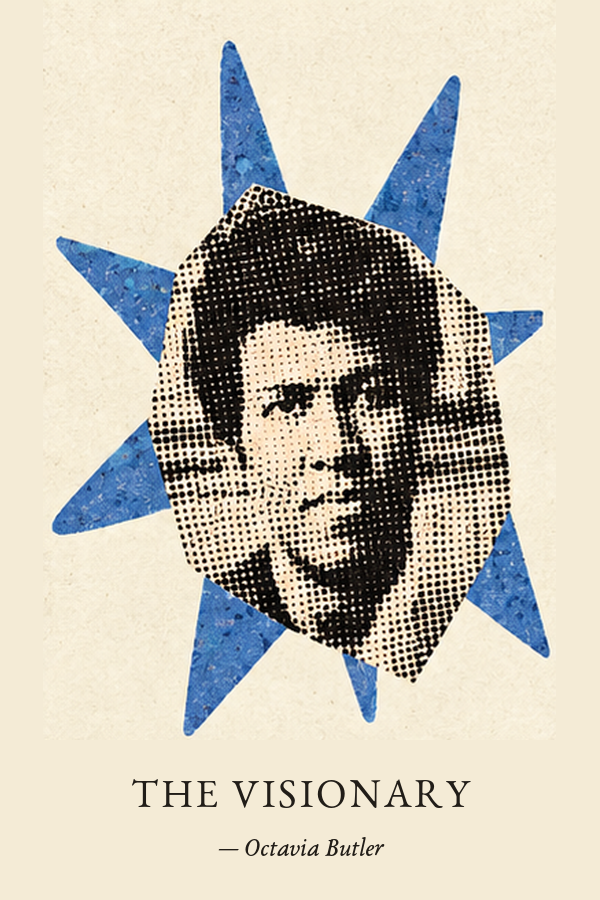
A Visionary sees what doesn't exist yet and writes it into being anyway. She's oriented toward the horizon before she's oriented toward the desk: new concepts, new structures, new ways a thing could work arrive faster than she can build them, and the building is almost secondary to the seeing. Butler spent a career imagining futures decades before the rest of us caught up with them; Parable of the Sower reads less like fiction now than like something she just noticed first and wrote down. That's the Visionary's particular gift: the ability to hold a future no one else can see yet, clearly enough to describe it to people who can't picture it on their own.
Their shadow side is restlessness. Because the next idea is always more vivid than the current one's unglamorous middle stretch, Visionaries can end up with a drawer full of beginnings and very few endings. It's easy to mistake this for a discipline problem, but it's usually something more specific: waiting for the conditions to feel "right" before starting, when the truth is that a Visionary rarely feels fully ready, because readiness isn't really how this archetype operates. The vision comes first. The execution has to be chosen, on purpose, before it feels urgent.
Reflection: What idea have you been waiting for the perfect conditions to begin?
The Maker — Faith Ringgold
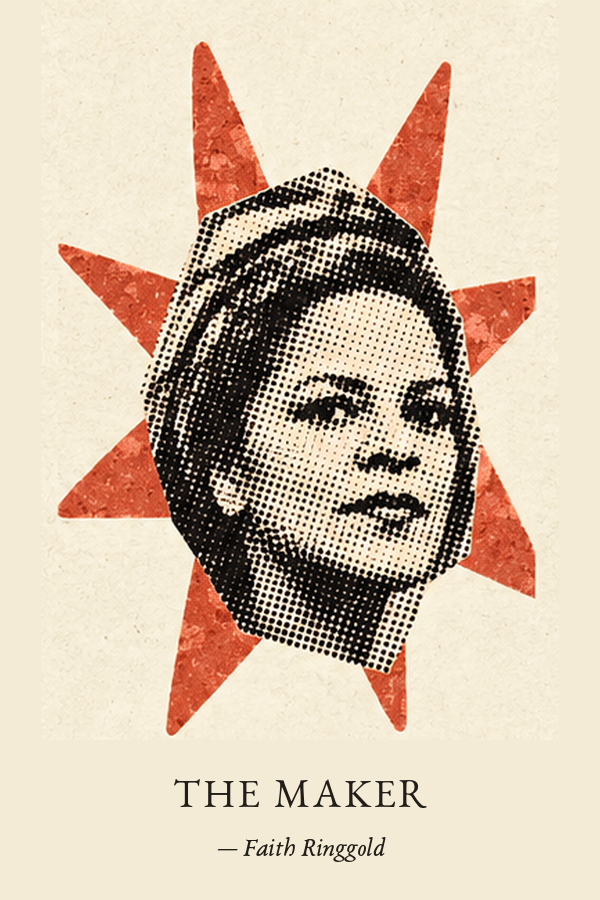
A Maker believes meaning lives in the hands, not just the head. Thinking happens through the material, not before it. Ringgold's story quilts fused painting, sewing, and narrative into one inseparable act, proof that "craft" and "fine art" were never actually two different things, just two words for the same impulse to make something real with your own hands. For a Maker, an idea isn't finished being understood until it's been built; she trusts the material itself to tell her what's true, often discovering what she meant only partway through making it.
Their shadow side is a very particular kind of perfectionism, one that lives in the hands rather than the mind. A Maker can keep refining something long after it's technically done, not because she's unsure of the idea, but because the object itself hasn't told her it's finished yet. That instinct, so useful in the studio, can quietly become the reason nothing ever leaves it. The work gets safer the longer it stays unseen, and "almost ready" can become a permanent address.
Reflection: What have you kept refining past the point it needed to be shared?
The Seeker — Mary Oliver (with bell hooks)
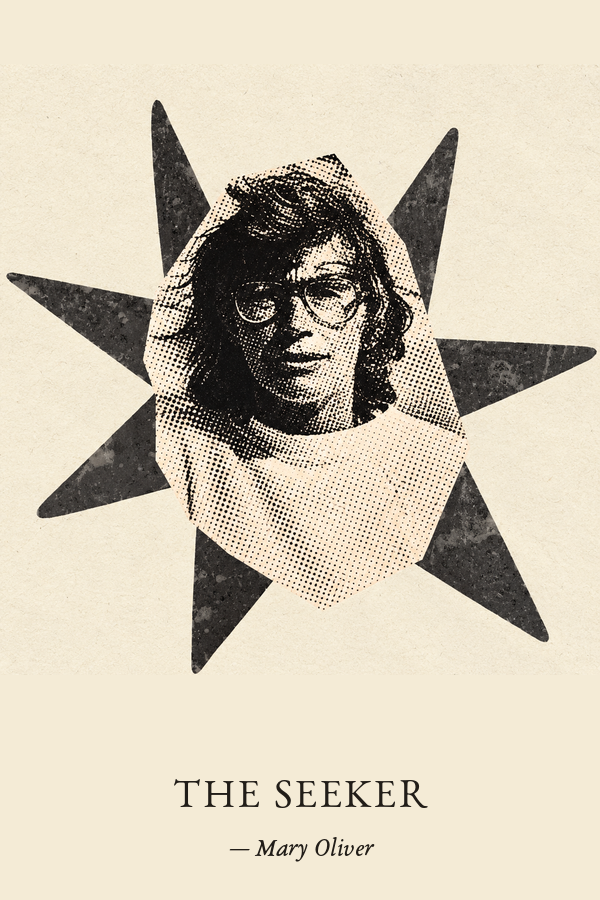
A Seeker creates from a bottomless curiosity about how things work and what they mean. Understanding isn't a step before the creative act, it is the creative act. Oliver spent a lifetime paying scrupulous attention to the natural world and calling it prayer, asking what it is you plan to do with your "one wild and precious life," while bell hooks turned that same hunger toward love, culture, and power, treating every essay as an act of genuine inquiry rather than a conclusion she'd already reached. Seekers don't create to prove what they know. They create to find out.
Their shadow side is that the searching can become a hiding place. One more book, one more course, one more expert's opinion, each one a legitimate act of rigor that can also, quietly, be a way of postponing the vulnerability of actually starting. A Seeker rarely feels unprepared because she's lazy. She feels unprepared because there's always more to learn, and the goalposts of "enough" research keep moving just out of reach.
Reflection: What are you still "researching" that you're actually ready to begin?
The Nurturer — Toni Morrison
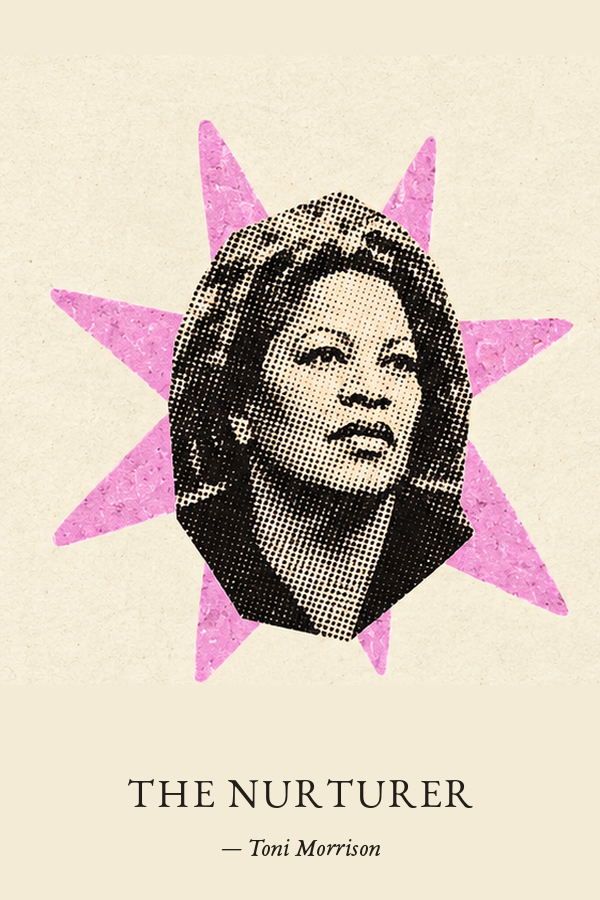
A Nurturer creates in service of other people's becoming. Her gift isn't just what she makes, it's the space she makes it inside of: room for home, for belonging, for someone else to become more fully themselves. Morrison's novels held that kind of space on the page, and for years, as an editor, she held it in real life too, nurturing the careers of the Black writers who came after her. The gift shows up as much in who she helped become as in what she personally authored.
Their shadow side is that a Nurturer can pour so much creative energy into other people that her own work quietly gets moved to "later." It rarely looks like neglect from the outside. It looks like generosity, like showing up for everyone else first. But over time, a Nurturer's own creative voice can start to feel like an indulgence she hasn't earned yet, something that has to wait until everyone else is taken care of, which, if she's honest, is never.
Reflection: If you gave your own creative work the attention you give everyone else's, what would you make?
The Alchemist — Frida Kahlo
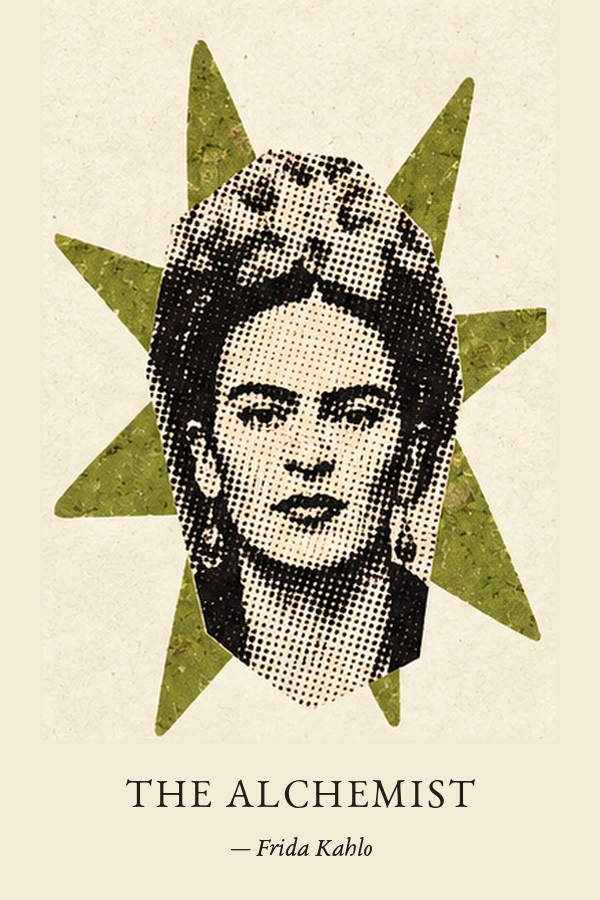
An Alchemist turns hardship into something the whole room can use. This one barely needs justifying: chronic pain transformed into some of the most iconic self-portraiture ever made is the archetype's tagline, made literal. Alchemists don't avoid the wreckage; they treat it as raw material, the place where the realest work comes from. What looks like resilience from the outside is, from the inside, something closer to instinct: of course this becomes the work. What else would it become?
Their shadow side is a different flavor of restlessness than the Visionary's: not a pull toward the next idea, but a pull away from the current one once it's been transformed enough to feel survivable. Staying in something after the hardest part is over can start to feel suffocating, so an Alchemist sometimes leaves before the work, or the routine, or the relationship, is actually complete. Transformation is the gift. Staying through to completion is the practice that has to be chosen on top of it.
Reflection: What difficult chapter of your life still has something to teach you creatively?
Which one are you?
Knowing your archetype is just the beginning of the work. The shadow side of each pattern isn't a flaw to fix once and be done with; it's a tendency that shows up again every time you're building something that matters to you, which is exactly why it's worth having real support for it.
In coaching, this looks different for each archetype. A Visionary and I will usually work on choosing one horizon to walk toward on purpose, building small, concrete commitments that hold her accountable to finishing instead of starting again. A Maker and I work on noticing the difference between a piece that isn't done and a piece she's simply afraid to release, building rituals around "done enough to share" that don't depend on the project ever feeling perfect. A Seeker and I work on setting a research limit in advance, deciding what "enough" looks like before the searching starts, so curiosity stays a gift instead of a stall tactic. A Nurturer and I work on treating her own creative work as a real commitment with its own time on the calendar, not a reward she gets to if there's anything left over. And an Alchemist and I work on staying through the unglamorous, uncomfortable last stretch of a project, after the transformation has already happened and all that's left is finishing it.
None of this is about becoming a different kind of creative person. It's about understanding the one you already are well enough to stop fighting yourself.
Curious which of the archetypes you are?