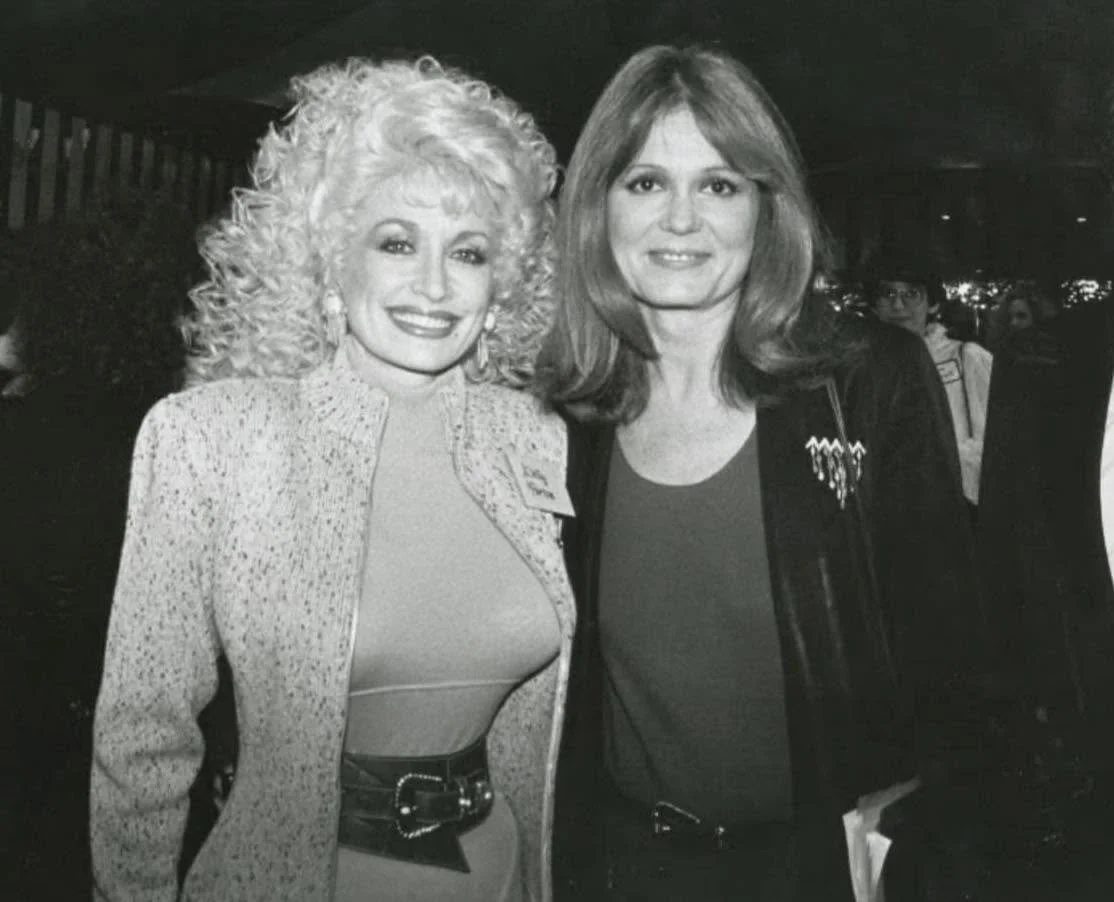
Nine days. That’s how long separated the deaths of Dolly Parton and Gloria Steinem this year, two of the most recognizable women in modern American life, gone within the same moment in time, having spent sixty-some years being almost nothing alike.
One was a folk-singing entertainer from a hollow in Tennessee who built an empire out of rhinestones, self-deprecating jokes, and a refusal to say anything unkind about anyone in public. The other was a journalist and organizer from Toledo who spent her life saying the exact thing everyone else was too polite to say, in rooms that didn’t welcome it.
If you’d asked either woman’s critics which one was “authentic,” most people would have picked a side without thinking twice. Steinem’s supporters would have called Parton’s persona a performance, all wigs, rhinestones, and Southern charm, engineered to be liked. Parton’s fan’s might have called Steinem’s bluntness exhausting, an act of it's own kind, performed for effect.
They’d both have missed the mark. And the case for that is worth making, because most of us are quietly operating on the same false premise: that authenticity has to look a certain way, and if we’re not doing it that way, then we’re some how doing it wrong.
I’ve been sitting with my grief for both these women, who were larger than life, and two of my greatest role models, for reason’s that had nothing to do with each other. Dolly taught me that softness isn’t the same as weakness, that you can be warm and still be completely uncompromising about who you are. Gloria taught me that you’re allowed to speak the truth to power. Between the two of them, I got permission for almost every version of myself I’ve ever had to grow into. That’s the part that I keep coming back to: femininity was never one thing either of them was modeling.
Here’s what I don’t think gets said enough about them: they weren’t opposites when it came to femininity, feminism, or authenticity. They were the same legacy, just spent two different ways, like two sides of one coin. Both of them were, at their core, in the business of expanding what a woman was allowed to be. Gloria did it from the outside, pushing on the institutions. Dolly did it from the inside, redefining the terms while everyone was busy underestimating her. It’s easy to think of women’s empowerment as a single lane. But they showed us that you could move in opposite directions toward the same exact destination.
Gloria seemed to understand this better than most of her own admirers did. In January 1987, she personally profiled Dolly in Ms., the magazine she co-founded, naming her one of that year’s Women of the Year. She wrote that Dolly “has used her business sense to bring other women and poor people along with her,” and, more pointedly: “If feminism means each of us finding our unique power, and helping other women to do the same, Dolly Parton certainly has done both.” Gloria noticed that Dolly’s rhinestones and wigs weren’t a retreat from feminism, they were a redirection of it: “her flamboyant style has turned all the devalued symbols of women to her own ends.” The woman famous for being blunt was also the one generous enough to recognize a completely different kind of power when she saw it.
Steinem’s own authenticity was built on saying the true thing regardless of the room’s temperature. “The truth will set you free,” she said, “but first it will piss you off.” She knew exactly what it would cost her, she said as much herself: “Any woman who chooses to behave like a full human being should be warned that the armies of the status quo will treat her a something of a dirty joke.” She wasn’t guessing at the backlash. She named it in advance and kept going anyway. And contrary to the caricature of Steinem as a scold, people who watched her work up close describe something more specific: she paired hard truths with real warmth, famously giving even skeptics “feminism 101” rather than a lecture, converting people through patient dialogue as often as confrontation. Her authenticity wasn’t aggression for its own sake, it was refusing to let the discomfort in the room talk her out of what was honest and true.
Parton’s authenticity ran almost the opposite mechanism, and it shows up in more than just anecdote. A linguistic analysis of five decades of her self-written songs found she used significantly more positive language than her peers, and that it never drifted the way the industry did. She stayed consistently hopeful even while writing about hardships like childhood poverty or being looked down on. Her power wasn’t confrontational. It was refusing to let ridicule change her, and outlasting it instead; becoming a rare bridge across the exact political and cultural lines Steinem spent her life fighting across.
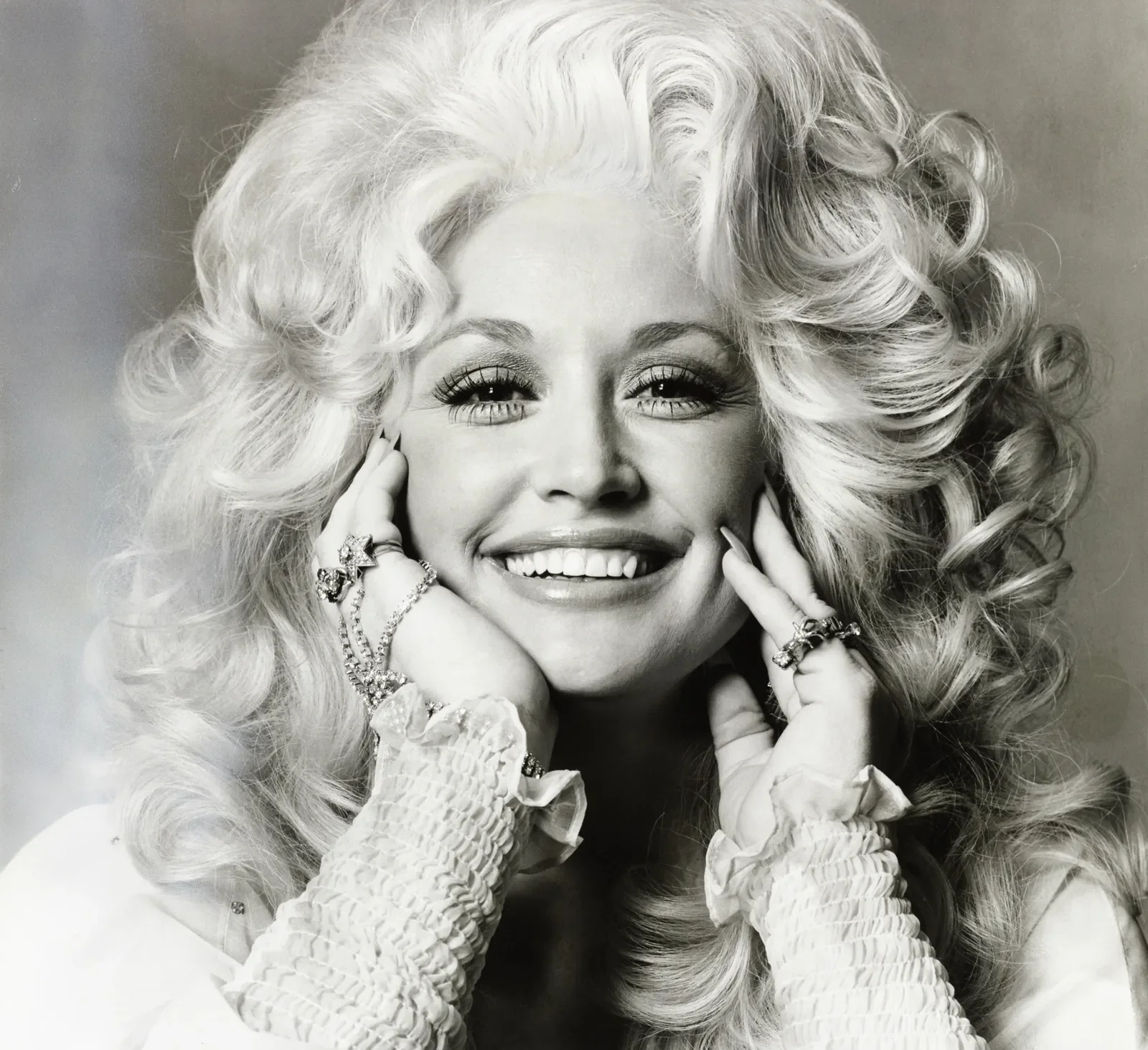
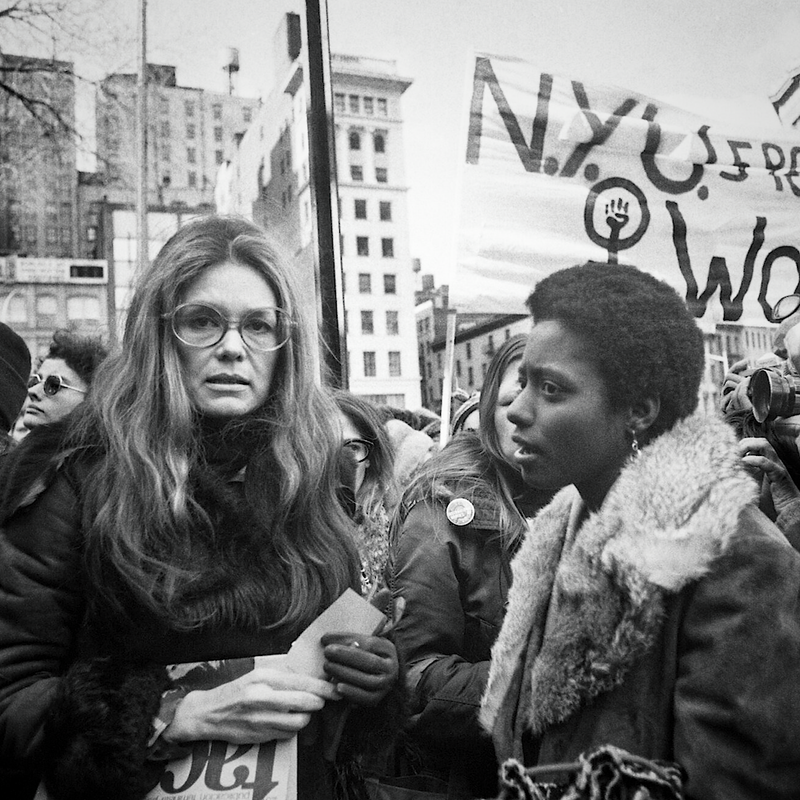
But they weren’t always existing on opposite sides of feminism. Over their careers, both women were called a joke in the public eye. Steinem said so outright. Parton lived it for a decade of magazine covers and late-night punchlines about her hair, her figure, her drawl. Neither one changed shape to make themselves more palatable. Steinem got louder. Parton got warmer. And both became more successful. There wasn’t a single right answer to how to perform being a woman. They were just two women being exactly, unshakably themselves, and the world eventually stopped making jokes because neither of them flinched long enough to make the bit land.
One of the things they shared, and one that I feel in my own body when I think about them: neither of them had children. And neither do I. I say it because it matters to the shape of their legacies, not despite it. We still measure a woman’s impact, however half-consciously, against how well she has mothered someone. Dolly and Gloria built entire structures of care and change that never ran through that channel at all. Dolly funding literacy programs and calling herself “everybody’s mother” in the way that actually meant something, Gloria organizing for the rights of women who would raise the next generation without her ever having to. Neither of them fit the standard shape society hands women for how to matter. Both of them mattered enormously anyway. I think about that on the days where I question whether the life I’m building looks “enough” like anyone else’s. But it doesn’t have to. It just has to be true to me.
That’s really what authenticity is, underneath the word we’ve worn smooth from overuse. It isn’t a personality type. It isn’t warmth, and it isn’t bluntness, and it isn’t whichever one currently reads as more “real.” It’s fidelity to your own nature under pressure to be something easier to categorize. A hawk and a fox both survive the same winter doing almost nothing alike, and neither one is the authentic version of the other.
So the question worth sitting with isn’t which of these two feminist icons you’re more like. It’s which kind of woman you’ve been quietly, wrongly measuring yourself against, and whether it’s time to stop asking which kind of authentic life you’re supposed to be living, and start asking what’s actually true to your own nature, even if it looks nothing like either of theirs.
A note on complexity: Dolly Parton and Gloria Steinem were not perfect, and neither would have claimed to be. Both made choices over long, public lives that I don’t personally agree with, and neither is above the kind of honest scrutiny anyone deserves. This piece isn’t an argument that they got everything right. It’s about what their impact, taken as a whole, teaches the rest of us about staying true to our own nature. Holding admiration and honest disagreement at the same time feels like the least I owe two women who spent their lives refusing to be made smaller by the opinions of others.
Sources referenced: Ms. Magazine, "Dolly Parton's Unique Feminist Power, as Told by Gloria Steinem" · KTAR/AP, "Was Dolly Parton a feminist?" · CNN, "Remembering Dolly and Gloria, childfree icons" · Euronews, Steinem quotes · The Daily Beast, on Steinem's approach · Psychology Today, on Parton's songwriting and bridge-building
Jenn Potratz is a certified health and wellness coach and the founder of Blue-Eyed Birds Creative, a coaching and consulting practice for people navigating transition, creativity, and the question of what comes next. Learn more at blueeyedbirds.com.